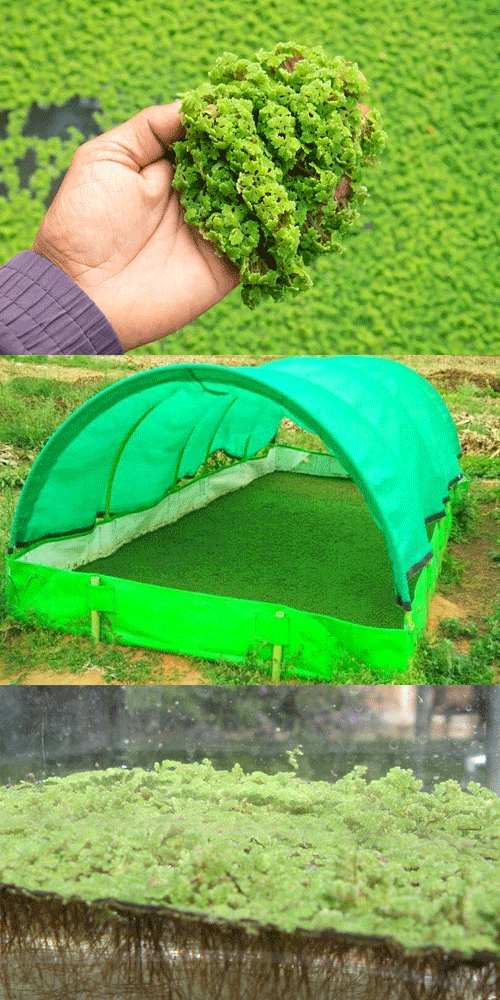
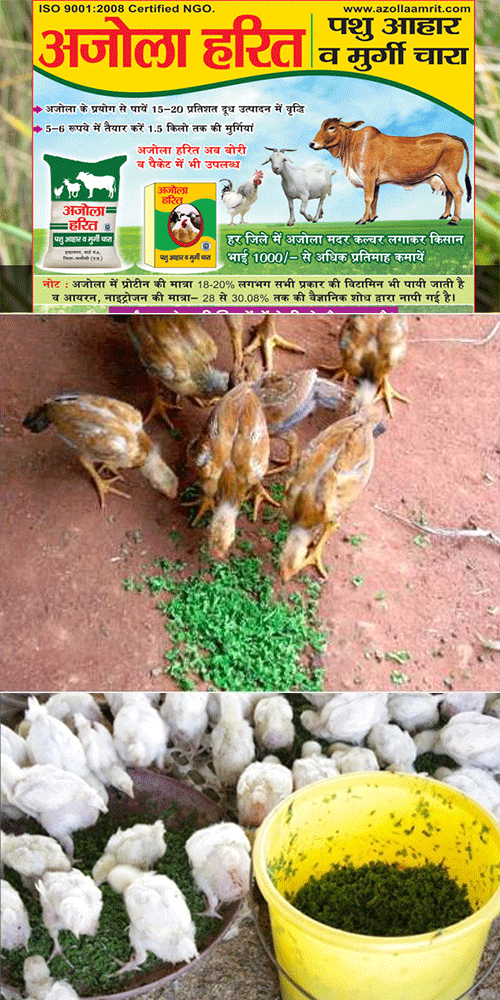
Why Azolla

Azolla Benefits

How Azolla improves livestock nutrition, cuts feed costs and supports sustainable farming.

Azolla Benefits For Paddy Cultivation

Azolla Benefits For Paddy Cultivation

English

Azolla offers several benefits for paddy cultivation. It acts as a natural bio-fertilizer by fixing atmospheric nitrogen, enriching the soil, and reducing the need for chemical fertilizers. Azolla also helps suppress weeds, providing a natural cover that prevents weeds from overtaking the paddy fields. Additionally, it improves soil health by adding organic matter, enhancing water retention, and promoting the growth of beneficial microorganisms. Integrating Azolla in paddy fields can lead to better crop yields and sustainable farming practices

धान की खेती के लिए अजोला के लाभ

हिन्दी

अजोला धान की खेती के लिए कई लाभ प्रदान करता है। यह वायुमंडलीय नाइट्रोजन को बांधकर प्राकृतिक जैविक उर्वरक का काम करता है, जिससे मिट्टी समृद्ध होती है और रासायनिक उर्वरकों की आवश्यकता कम हो जाती है। अजोला खरपतवार को दबाने में भी मदद करता है, जिससे धान के खेतों में खरपतवारों के फैलने से रोका जा सकता है। इसके अलावा, यह मिट्टी के स्वास्थ्य में सुधार करता है, जिसमें जैविक पदार्थों को जोड़ना, पानी को बनाए रखना और लाभकारी सूक्ष्मजीवों के विकास को बढ़ावा देना शामिल है। धान के खेतों में अजोला का समावेश बेहतर फसल उत्पादन और सतत खेती को प्रोत्साहित कर सकता है

Introduction Of Azolla In Paddy Fields

Introduction Of Azolla In Paddy Fields

English

In recent years, the use of biofertilizers has gained significant importance, attracting the attention of agricultural scientists. The value of Azolla as organic manure for rice was first demonstrated in North Vietnam in 1957 and was later introduced in the U.S.A, Indonesia, Japan, the Philippines, China, and India. Since then, the potential of Azolla as a green manure crop for rice has been increasingly recognized. Azolla is a genus of water ferns that assimilates nitrogen through a symbiotic relationship with the nitrogen-fixing blue-green alga Anabaena azollae, which resides in the cavities of the upper leaf lobes of Azolla

धान के खेतों में अजोला का परिचय

हिन्दी

हाल के वर्षों में, जैव उर्वरकों के उपयोग ने महत्वपूर्ण महत्व प्राप्त किया है, जिससे कृषि वैज्ञानिकों का ध्यान आकर्षित हुआ है। धान के लिए अजोला को जैविक खाद के रूप में पहली बार 1957 में उत्तर वियतनाम में प्रदर्शित किया गया था, और इसके बाद इसे अमेरिका, इंडोनेशिया, जापान, फिलीपींस, चीन, और भारत में पेश किया गया। तब से, धान के लिए हरी खाद के रूप में अजोला की संभावनाओं को बढ़ती हुई मान्यता मिली है। अजोला एक प्रकार का जलीय फर्न है जो नाइट्रोजन को अनाबेना अजोले नामक नाइट्रोजन-फिक्सिंग नीली-हरी शैवाल के साथ सहजीवी संबंध के माध्यम से अवशोषित करता है, जो अजोला की ऊपरी पत्तियों की लोब्स की गुहाओं में निवास करती है

Suitable Climate To Grow Azolla

Suitable Climate To Grow Azolla

English

Azolla is known to grow and multiply well in India from July to February but dies rapidly at higher temperatures. In many agro-climatic regions of India, maintaining Azolla is a challenge due to the high temperatures. Therefore, it is crucial to screen and select a suitable strain of Azolla that is temperature-tolerant and adaptable to specific climatic conditions. This is vital for the successful introduction of Azolla bio-fertilizer technology in rice production.

Under less favorable conditions, the application of phosphorus (P) fertilizer is necessary to produce Azolla biomass. If P-deficient conditions occur, Azolla's growth will cease. Since most rice soils are deficient in P, applying phosphorus for Azolla is necessary but can be costly. Therefore, exploring cheaper sources of phosphorus is essential.

Salinity is another major issue affecting rice cultivation in several parts of India. Identifying salt-tolerant Azolla species that can be used as green manure in saline soils is necessary. The benefits of using Azolla as green manure have been well documented, but there are limited studies on the decomposition and availability of nitrogen fixed by Azolla for rice plants. To optimize the use of Azolla, it is important to understand the fate of Azolla nitrogen and its availability to rice.

With rising fertilizer costs, which can account for 40 to 50 percent of the total input costs in rice cultivation, Azolla offers a cost-effective alternative to chemical fertilizers. Organic fertilizers like Azolla can replace high-cost chemical fertilizers by mobilizing cheaper resources for productive purposes. Azolla, which has attracted the attention of agricultural scientists over the past three decades, is considered to have a high potential for replacing inorganic nitrogen fertilizers due to its ability to fix atmospheric nitrogen.

Besides increasing organic carbon content and nitrogen availability in the soil, Azolla is also a good source of other nutrients and possesses the agronomic qualities of other green manure crops. The economic potential of Azolla is significant, with the savings on chemical fertilizer and weedicide costs exceeding 10 percent, provided the environmental conditions for Azolla growth and multiplication are favorable.

Once Azolla is introduced into a rice field, it can sustain itself and act as a renewable biofertilizer. There are two primary methods of using Azolla: as dual cropping or growing in the nursery and applying it prior to transplanting. Several studies, both in India and abroad, have reported increases in paddy yields due to Azolla inoculation

अजोला उगाने के लिए उपयुक्त जलवायु

हिन्दी

अजोला को भारत में जुलाई से फरवरी के बीच अच्छी तरह से बढ़ने और फैलने के लिए जाना जाता है, लेकिन उच्च तापमान पर यह तेजी से मर जाता है। भारत के कई कृषि-जलवायु क्षेत्रों में, अजोला को बनाए रखना एक चुनौती है क्योंकि तापमान अधिक होता है। इसलिए, यह आवश्यक है कि एक ऐसा उपयुक्त अजोला स्ट्रेन चुना जाए जो तापमान सहिष्णु हो और विशेष जलवायु परिस्थितियों के अनुरूप हो। यह धान उत्पादन में अजोला जैव-उर्वरक तकनीक के सफल परिचय के लिए महत्वपूर्ण है।

कम अनुकूल परिस्थितियों में, अजोला बायोमास के उत्पादन के लिए फॉस्फोरस (P) उर्वरक का उपयोग आवश्यक है। यदि फॉस्फोरस की कमी होती है, तो अजोला का विकास रुक जाएगा। चूंकि अधिकांश धान की मिट्टी में फॉस्फोरस की कमी होती है, इसलिए अजोला के लिए फॉस्फोरस का उपयोग आवश्यक है, लेकिन यह महंगा हो सकता है। इसलिए, फॉस्फोरस के सस्ते स्रोतों की तलाश करना आवश्यक है।

भारत के कई हिस्सों में धान की खेती में लवणता एक प्रमुख समस्या है। ऐसे लवण-सहिष्णु अजोला प्रजातियों की पहचान करना आवश्यक है जो लवणीय मिट्टी में हरी खाद के रूप में उपयोग की जा सकें। हरी खाद के रूप में अजोला के उपयोग के लाभ अच्छी तरह से दस्तावेजित हैं, लेकिन अजोला द्वारा निश्चित नाइट्रोजन के अपघटन और धान के पौधों के लिए इसकी उपलब्धता पर सीमित अध्ययन हैं। अजोला के प्रभावी उपयोग के लिए, अजोला नाइट्रोजन के परिणाम और इसकी धान के पौधे के लिए उपलब्धता का अध्ययन करना महत्वपूर्ण है।

उर्वरक लागत में वृद्धि के साथ, जो धान की खेती में कुल लागत का 40 से 50 प्रतिशत हो सकती है, अजोला रासायनिक उर्वरकों का एक लागत-प्रभावी विकल्प प्रदान करता है। अजोला जैसे जैविक उर्वरक उच्च-लागत वाले रासायनिक उर्वरकों को बदलने के लिए सस्ते संसाधनों को उत्पादक उद्देश्यों के लिए जुटा सकते हैं। अजोला, जिसने पिछले तीन दशकों से कृषि वैज्ञानिकों का ध्यान आकर्षित किया है, को वायुमंडलीय नाइट्रोजन को ठीक करने की अपनी क्षमता के कारण अकार्बनिक नाइट्रोजन उर्वरकों को बदलने की उच्च क्षमता माना जाता है।

मिट्टी में जैविक कार्बन सामग्री और नाइट्रोजन की उपलब्धता बढ़ाने के अलावा, अजोला अन्य पोषक तत्वों का एक अच्छा स्रोत है और इसमें अन्य हरी खाद वाली फसलों से जुड़े कृषि गुण भी होते हैं। अजोला की आर्थिक क्षमता भी महत्वपूर्ण मानी जाती है, रासायनिक उर्वरक और खरपतवारनाशक की लागत में बचत के साथ, अजोला के विकास और गुणा के लिए पर्यावरणीय परिस्थितियों के अनुकूल होने पर 10 प्रतिशत से अधिक होती है।

एक बार धान के खेत में अजोला का परिचय हो जाने पर, यह खुद को बनाए रख सकता है और एक नवीकरणीय जैव-उर्वरक के रूप में कार्य कर सकता है। अजोला का उपयोग करने के दो मुख्य तरीके हैं: द्वैध फसल के रूप में और नर्सरी में उगाकर और प्रत्यारोपण से पहले इसका उपयोग करना। भारत और विदेशों में कई अध्ययनों ने अजोला के प्रत्यारोपण के कारण धान की पैदावार में वृद्धि की सूचना दी है

How Does It Work

English

Azolla is a genus of small aquatic ferns that are native to Asia, Africa, and the Americas. Three species of Azolla are found in parts of the United States. These ferns naturally inhabit lakes, swamps, streams, and other water bodies. Some species have been dispersed by humans or natural processes to various regions around the world. While some Azolla species are strictly tropical or subtropical, others can grow and thrive in both temperate and tropical climates. Azolla has attracted the interest of botanists and agriculturists for years due to its symbiotic relationship with the nitrogen-fixing blue-green alga Anabaena, which enhances its agricultural value

यह कैसे काम करता है

हिन्दी

अजोला एक छोटे जलीय फर्नों की जाति है जो एशिया, अफ्रीका, और अमेरिका के मूल निवासी हैं। अमेरिका के कुछ हिस्सों में अजोला की तीन प्रजातियाँ पाई जाती हैं। ये फर्न स्वाभाविक रूप से झीलों, दलदलों, नदियों, और अन्य जल स्रोतों में निवास करते हैं। कुछ प्रजातियाँ मनुष्यों या प्राकृतिक प्रक्रियाओं द्वारा दुनिया के विभिन्न हिस्सों में फैल गई हैं। जबकि कुछ अजोला प्रजातियाँ पूरी तरह से उष्णकटिबंधीय या उपोष्णकटिबंधीय होती हैं, अन्य दोनों तापमानीय और उष्णकटिबंधीय जलवायु में उग सकती हैं और पनप सकती हैं। अजोला ने वर्षों से वनस्पतिशास्त्रियों और कृषि वैज्ञानिकों का ध्यान आकर्षित किया है, इसकी नाइट्रोजन-फिक्सिंग नीली-हरी शैवाल अनाबेना के साथ सहजीवी संबंध के कारण, जो इसकी कृषि मूल्य को बढ़ाता है

What Are The Benefits Of Using Azolla

What Are The Benefits Of Using Azolla

English

Azolla as a Nitrogen Fertilizer for Increasing Crop Yields :

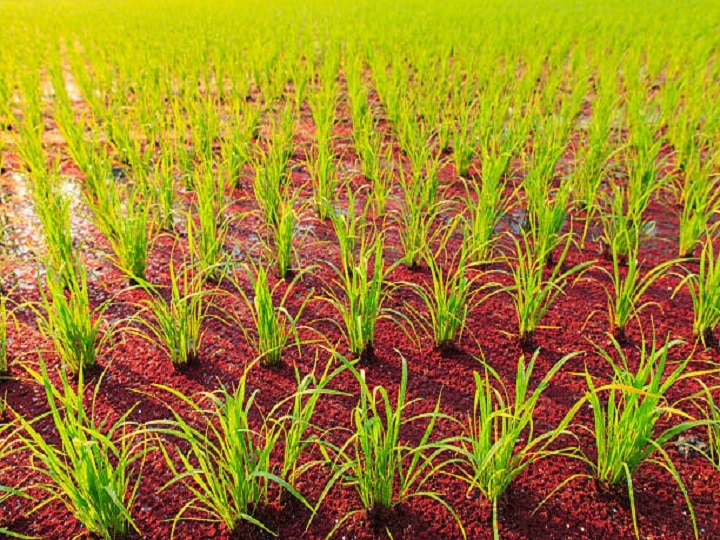
Azolla plants are often described by the Chinese and Vietnamese as miniature nitrogen fertilizer factories. The Vietnamese use Azolla as a nitrogen source because it continuously provides nitrogen for their rice paddies. The nitrogen fixed by Azolla becomes available to the rice once the Azolla mat is incorporated into the soil, where its nitrogen is released through decomposition. Typically, Azolla takes 25 to 35 days to supply sufficient nitrogen for a 4 to 6 ton/ha rice crop during the rainy season, or a 5 to 8 ton/ha crop under irrigation during the dry season.


Maintaining Soil Fertility:

As a green manure, Azolla significantly impacts soil fertility through its organic matter and nitrogen content. When incorporated into the soil, Azolla decomposes to form humus. This humus enhances the soil's water-holding capacity and promotes better aeration, drainage, and aggregation, which are crucial for maintaining highly productive soils. Organic matter from Azolla helps bind soil particles together and improves the friability of clayey soils.

In addition to its effects on soil physical properties, Azolla plays a key role in nutrient cycling. While growing in paddy fields, Azolla fixes nitrogen and absorbs nutrients from the water that might otherwise be lost. As Azolla decomposes and forms humus, these nutrients are gradually released into the soil, enriching it over time.


Controlling the Growth of Aquatic Weeds:

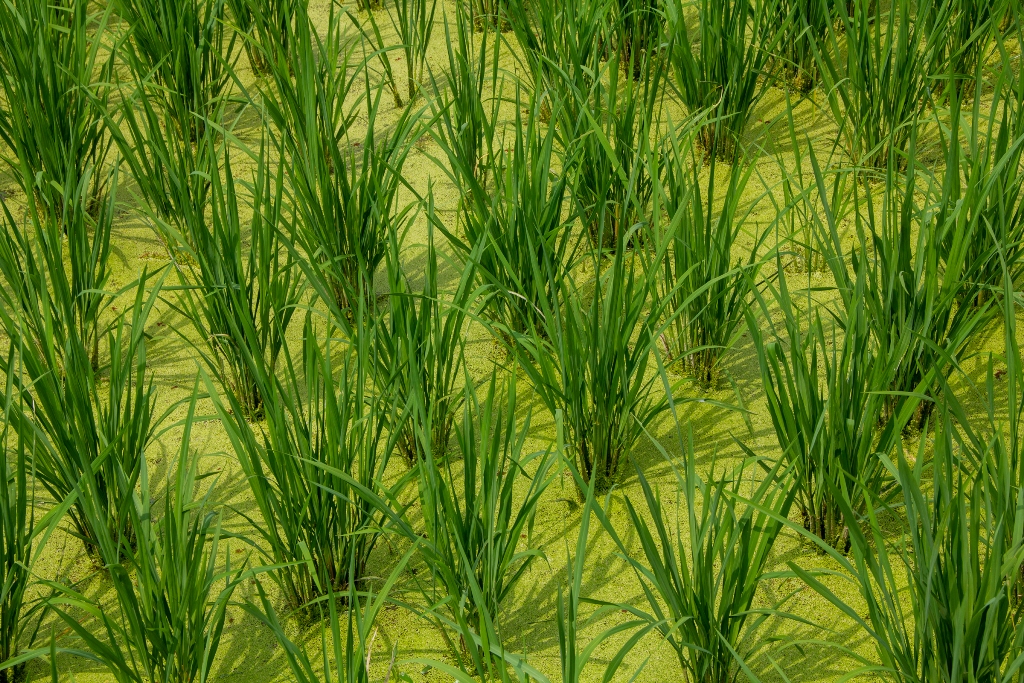
Agricultural economists have found that Asian farmers, especially women, spend more time on weeding than on any other rice production activity. Although research on this topic is limited, it is widely believed that Azolla helps suppress the growth of certain aquatic weeds. Azolla achieves this by forming a thick, light-proof mat that inhibits weed growth.

There are two primary mechanisms for this suppression. The most effective mechanism is the light-starvation of young weed seedlings due to the blockage of sunlight by the dense Azolla mat. The second mechanism involves the physical resistance provided by the heavy, interlocking Azolla mat, which prevents weed seedlings from establishing. In weed-infested rice fields, the benefits of Azolla in suppressing weeds may even exceed its advantages as a nitrogen source. Importantly, rice seedlings are not affected by Azolla’s weed suppression because they grow above the Azolla mat after transplantation.


How Azolla Is Used as a Green Manure:

Azolla can be used as green manure in several ways: by growing it as a monocrop and incorporating it as basal manure before rice transplanting, or by growing it as an intercrop and applying it as a top dressing after rice is transplanted. Additionally, Azolla can be used both as a monocrop and an intercrop. In China and Vietnam, Azolla monocropping in winter and spring provides nitrogen for rice crops, though it is less common in summer due to high temperatures and pests. Intercropped Azolla is introduced manually or with a rotary weeder, and its decomposition releases nitrogen, boosting grain production.
अजोला का उपयोग करने के लाभ क्या हैं

हिन्दी

अजोला को फसलों की उपज बढ़ाने के लिए नाइट्रोजन उर्वरक के रूप में:चीन और वियतनाम में अजोला पौधों को अक्सर छोटे नाइट्रोजन उर्वरक कारखानों के रूप में वर्णित किया जाता है। वियतनाम में अजोला को नाइट्रोजन स्रोत के रूप में उपयोग किया जाता है क्योंकि यह लगातार नाइट्रोजन प्रदान करता है। अजोला द्वारा फिक्स किया गया नाइट्रोजन तब धान के लिए उपलब्ध होता है जब अजोला की परत को मिट्टी में मिला दिया जाता है, जहाँ इसका नाइट्रोजन अपघटन के माध्यम से जारी होता है। आमतौर पर, अजोला को 4 से 6 टन/हेक्टेयर धान की फसल के लिए 25 से 35 दिन लगते हैं, जो बारिश के मौसम में या सूखे मौसम में सिंचाई के तहत 5 से 8 टन/हेक्टेयर फसल के लिए पर्याप्त नाइट्रोजन प्रदान करता है।

मृदा उर्वरता बनाए रखना:हरी खाद के रूप में, अजोला मृदा की उर्वरता पर महत्वपूर्ण प्रभाव डालता है, इसके कार्बनिक पदार्थ और नाइट्रोजन सामग्री के माध्यम से। जब अजोला को मिट्टी में मिलाया जाता है, तो यह अपघटित होकर ह्यूमस बन जाता है। यह ह्यूमस मिट्टी की जल धारण क्षमता को बढ़ाता है और बेहतर वायु प्रवाह, जल निकासी, और संयोग को प्रोत्साहित करता है, जो अत्यधिक उत्पादक मिट्टी के लिए आवश्यक हैं। अजोला का कार्बनिक पदार्थ मिट्टी के कणों को जोड़ने में मदद करता है और कीचड़ वाली मिट्टी की छानबीन को सुधारता है।

मृदा के भौतिक गुणों पर इसके प्रभाव के अतिरिक्त, अजोला पोषक तत्वों के चक्रण में महत्वपूर्ण भूमिका निभाता है। धान के खेतों में उगते समय, अजोला नाइट्रोजन को स्थिर करता है और पानी से पोषक तत्वों को अवशोषित करता है जो अन्यथा बह सकते हैं। जब अजोला अपघटित होकर ह्यूमस बन जाता है, तो ये पोषक तत्व धीरे-धीरे मिट्टी में रिलीज होते हैं, जिससे समय के साथ मिट्टी समृद्ध होती है।

पानी में उगने वाले खरपतवारों की वृद्धि को नियंत्रित करना:कृषि अर्थशास्त्रियों ने पाया है कि एशियाई किसान, विशेष रूप से महिलाएं, जुताई में जितना समय व्यतीत करती हैं, उतना अन्य धान उत्पादन गतिविधियों में नहीं करतीं। हालांकि इस विषय पर शोध सीमित है, यह व्यापक रूप से माना जाता है कि अजोला कुछ पानी में उगने वाले खरपतवारों की वृद्धि को नियंत्रित करता है। अजोला यह एक घने, प्रकाश-रोधक परत बनाकर प्राप्त करता है, जो खरपतवारों की वृद्धि को रोकता है।

इस नियंत्रण के दो मुख्य तंत्र होते हैं। सबसे प्रभावी तंत्र है, अजोला की घनी परत द्वारा सूर्य के प्रकाश को अवरुद्ध कर युवा खरपतवार के पौधों को प्रकाश की कमी से मारना। दूसरा तंत्र अजोला की भारी, आपस में जुड़ी परत द्वारा प्रदान की गई भौतिक प्रतिरोध है, जो खरपतवार के पौधों को स्थापित होने से रोकता है। खरपतवार से प्रभावित धान के खेतों में, अजोला के खरपतवार नियंत्रण के लाभ नाइट्रोजन स्रोत के रूप में इसके लाभ को भी पार कर सकते हैं। महत्वपूर्ण बात यह है कि धान के पौधे अजोला की खरपतवार नियंत्रण प्रभाव से प्रभावित नहीं होते, क्योंकि वे रोपण के बाद अजोला की परत के ऊपर उगते हैं।

अजोला का हरी खाद के रूप में उपयोग:अजोला को हरी खाद के रूप में कई तरीकों से उपयोग किया जा सकता है: इसे मोनोक्रॉप के रूप में उगाकर धान की रोपाई से पहले बेसल खाद के रूप में मिलाना, या इसे इंटरक्रॉप के रूप में उगाकर धान की रोपाई के बाद टॉप ड्रेसिंग के रूप में लगाना। इसके अतिरिक्त, अजोला को मोनोक्रॉप और इंटरक्रॉप दोनों के रूप में उपयोग किया जा सकता है। चीन और वियतनाम में, सर्दी और वसंत में अजोला मोनोक्रॉपिंग धान की फसलों के लिए नाइट्रोजन प्रदान करती है, हालांकि गर्मियों में उच्च तापमान और कीटों के कारण यह कम सामान्य है। इंटरक्रॉप के रूप में अजोला को हाथ से या रोटरी वीइडर से लगाया जाता है, और इसका अपघटन नाइट्रोजन छोड़ता है, जिससे अनाज उत्पादन बढ़ता है।

© Copyright 2024-25 Azolla Amrit. All Rights Reserved / Developed By :- Dev India IT Services